Tuesday, December 27, 2011

A Big Project... I mean HUGE.


A few of you may not know this:
For the past few months a non-profit corporation has been in the works. Yes, a full-blown 501(c)(3).  It's not easy creating a non-profit (thus the many months of reading I've been doing on the subject), as a matter of fact it's THE hardest organization to form.  Sufficeth to say, I'm getting to know the IRS very well. My record is 2 hours and 3 minutes on hold with them. 

But what does Knok do?  This is the good part!

Knok Studios provides creative media for non-profits & other Christian charities.

It's as simple as that.

Knok's Board of Directors consist of Scott VanLant, John Skaanland, & Jerry Chevassus. As of tonight I've finished the last page of Knok's non-profit 501(c)(3) application, and my application is... 78 solid pages long! Next is to get together an application fee, then wait a few months for the IRS to grant Knok 501(c)(3) status.
This is extremely exciting: Essentially I can continue to do what God has given me skills to do, but now under the 'blessing' and financial protection of a 501(c)(3) non-profit organization.  Down the road Knok may possibly hire employees, such as other Christian media artists who need a way to make a paycheck while pursuing what they're best at.  (What better way to end this fantastic news but with a preposition?) 

Saturday, September 24, 2011

Sweet African Collage!

- Life is a Balance -
Created by Beau Chevassus, Freetown, Sierra Leone, inspired by Tara McHardy
They're all different photos, but they all have something in common.

Tuesday, September 20, 2011

6,646 miles later, here's what's going on:

  • As of yesterday we're home from Africa! Everything is perfect! 
  • After finding out the internet in our little house is 20mb/sec Beau sang "God Bless America" and wept profusely.
  • Liz has kissed her cat Splat many times on her dusty little head, and Liz has already purchased her a shiny new collar.
  • You Are Awesome is a very simple, one-take video Beau just uploaded on behalf of his African friend James The Receptionist. James loves Gospel music, Jesus, and Mariah Carey. He can bust out a song!
  • What has shocked us the most thus far?  How quiet it is. Our ears are still humming from the ship's generators.
  • We couldn't wait to go on a run without dodging traffic and jumping over deep sewer pits (although it was very exciting in Freetown); on our layover in Belgium, we ran through the city of Brussels (we saw NATO!).  Our body clocks were so messed up we did our run in the middle of the night.
  • The Christian Broadcasting Network (yes, the CBN) featured footage shot by Beau. Check out the incredible story here: With No Hands, Man Teaches Others to Farm
  • Take a quick peek at a video Beau made for a 5 year kid named Storm, through theMake A Wish Foundation. (Yes, the Make a Wish Foundation)... Storm on the Africa Mercy   Storm's wish was to come on the Africa Mercy, but since he was too sick, we brought it to him. It was an exhausting project, but totally worth it. Storm's family got back to us after the video was sent off and he absolutely loved it!
  • We apologize in an advance if--when in the middle of a conversation with you--blurt out something nonsensical. Please treat it as culture shock or side effects of malaria medication.
         Hypothetical situation:
         
    QFC Cashier: "That will be $2.34."
         
    Beau: "I GIVE YOU $2! [throwing a little stick of beef jerky at cashier] AND THIS FOR FREE."
      
       QFC 
    Cashier: "No, it's $2.34."
        
     Beau: [response 
    (New window.)]
  • Haven't seen our photos of us in Guinea? See the epic pics here!  Stepping Into Guinea.
  • What happens next? Beau and Liz will be sharing a lot of cool stuff at Wabash Church (stay tuned for dates and times!). Beau will also be uploading more videos and photos.  Beau starts work at Internet Academy next week. 
  • Local in Enumclaw or close by? Join us for an open house homecoming pot luck! Sept 24, 2011, 4:00-7:00pm.  21235 SE 396th St,Enumclaw WA 98022Bring something yummy (no rice or Beau will jump out a window and Liz will curl up into a little ball).
-Beau and Liz Chevassus

http://B.eaudacio.us/

Friday, September 9, 2011

Patient Story with Liz in photo!

Umu Fofanah
Story by Elaine B. Winn (Beau's good friend)
Edited by Nancy Predaina
Photos by Liz Cantu (Beau's good friend)

Umu sat next to her mother in the shade of the awning at the admissions tent. A quiet and modest 18-year-old, she had a very large tumor that expanded her chin, making it difficult to talk and leaving her bottom teeth in disarray. It had started four years before as a toothache, but then it grew rapidly, disfiguring her face and disrupting her life. She had been a relay racer on her school’s running team and played defense on the football team until verbal abuse from classmates became so degrading that she dropped out of school.

Her Aunt Fatmata had come to a Mercy Ships screening, hoping to find relief for her own health problem. But in the process, she met people with facial tumors similar to Umu’s. They were waiting for appointments for surgical repair. She knew her niece was afraid to go out because people laughed at her. So, she went to Guinea immediately to get Umu and her mother and brought them to a screening.
Grateful to have this opportunity, Umu and her mother sat in front of the admissions nurse, who offered encouragement while explaining the admission process. With all the questions answered, measurements taken, and the medical forms completed, she was ushered into a hospital ward in the middle of the afternoon. A bit hesitant and withdrawn, it took a while for her to become accustomed to her new surroundings. The fact that she was French-speaking added to her feeling of isolation. But the nursing staff soon made her feel welcome, and the patients in the ward treated her with understanding. When she discovered a day-worker who spoke French, she relaxed a bit.

The surgery went smoothly. When she awoke in her hospital bed, her hand could feel the growth was gone. One look in the mirror brought a huge smile as she jubilantly exclaimed, “I am beautiful, so beautiful!”  
The shy and retiring teen had bloomed into a lovely flower. The surgery had released a fountain of bliss that bubbled over, changing her demeanor into one of confidence and joy. She smiled at everyone around her.
After a few days of recovery and some post-operative care, Umu was released to begin her life again. “I am so happy to come here and do a surgery. I am so happy Fatmata brought me here,” she said with a warm smile. “If not for the ship, I would never have had a surgery,”
She is anxious to return to school to complete her education. “I want to be a doctor someday and come back to volunteer on the Mercy Ship,” she said. 

Thursday, September 1, 2011

"4.5 months is a long time!"

"4.5 months is a long time!"
- Liz Chevassus / Yesterday

"Poseidon's Bane"
By Liz Chevassus
Certainly volunteers stay on-board even longer... most of our friends Africa Mercy are serving for +2 years. It's a tough environment.  By no means is Mercy Ships a cruise liner, nor do they choose destinations based upon how nice the beaches are.  The local people in Sierra Leone are even tougher.  Ask an Africa Mercy surgeon about the Sierra Leone women's posture, and he’ll respond with, "It's very difficult to position them in surgery."  That's because everything is carried on their heads, whether it's a purse or a motorcycle engine, and their neck muscles are overly developed.  And they start when they're 4 years old.

Living in an environment such as this can make one callous towards life.  If you were a Salone and had both your hands chopped off at 15 years old, how would you respond?  With bitterness or grace?  Actually the answer is the latter; a whole lot of grace. Bambay (“Bomb-bay”) is a man, about Beau’s age, who had his hands amputated by rebels who were high on gunpowder and blood.  And yet still, as Beau stood across from him with a camera, Bambay enthusiastically waved his arms in the air, speaking excitedly how God has sent “you,” Mercy Ships, to teach him how to farm.  “We used to slash and burn our fields. We would work like elephants and eat like ants.  But through Biblical principles, we learn to care for God’s land.” The man has unstoppable forgiveness in his heart, and a grace that only Christ can infuse.

Apart from 1,000s of surgeries and operations, this is what Mercy Ships does.  We didn’t know about these programs before coming to Sierra Leone. Did you know that Mercy Ships teaches Biblical agricultural skills (Food for Life), they hire hundreds of local workers to equip them with desirable work experience, they train local doctors, they show the Jesus Film to 1,000s of people, they establish orphanages for street kids (Mercy Children), and heck of a lot more?  Nor did we.  But that’s why Beau films what he films… to broadcast these things.  And that’s why Liz does what she does… to keep the Jesus example going.
 
"Boy with his Catch"
By Beau Chevassus

Now, and we’ll attempt not to sound too cheesy here, but it’s the truth, and it has to be said: We’re not the ones doing these things.  It’s you.  His people.  Christ has equipped people like us, and our friends on-board, through you.

For Beau, one of the biggest lessons I’ve learned (and I’ve learned a lot while being here), is the importance of giving.  It’s not ours—our time, our possessions, and even our health—so why cling so fervently to it?  Certainly we are to be good stewards, God wants us to be wise with what He’s given us, but never to the degree of making us worry or making them our number one priority.  After all… these possessions are technically not ours.  Be good stewards, but when it comes down to brass buttons (wrong expression, I know) give it away!

We have a deep respect for those who do crazy stuff like this for Jesus, and those who support those crazies.  We only wish we could offer more.  We will be finishing our work here in two weeks, and we're looking forward to rest, family, friends, and pie (pie first!).  We’ll talk to you all soon.


-Beau & Liz Chevassus

"The Fisherman's Crew" By Beau Chevassus


Thursday, August 25, 2011

Chicken Fight - An Epic Africa Mercy Tour & Battle

What does the Africa Mercy look like? 
Take a gander at a creative tour of the world's largest NGO hospital ship, featuring Jay Swanson and myself, Beau Chevassus.

Chicken Fight
An Epic Africa Mercy Tour & Battle


This video does not reflect the views of, nor is it endorsed by Mercy Ships. However it did receive last place (The Razzie Award, a big bag of rice) in the Africa Mercy Independent Film Festival 2011 (AMIFF), and was quickly disqualified due to excessive use of violence and for not properly sanitizing hands upon entering the food line. It was debuted regardless as, according to chaplaincy, "A good example of what not to submit in an Africa Mercy film festival."

Writer, editor, and actor - Jay Swanson. http://JayOnABoat.com
Producer, actor, and sound effects - Beau Chevassus. http://B.eaudacio.us
Director of Photography and Cinematographer - Liz Chevassus.
Special thanks to the entire Africa Mercy crew, Video Copilot, Jeremy, Josh, Cassidy, Nathan, and Stockholm.

Thursday, August 18, 2011

Sierra Leone: The land of informal formality.

Sierra Leone, the land of late-night street discos and catchy slang, is at times remarkably formal. Even architecturally when driving down the dusty streets of Freetown, one will see a cement structure with re-bar sticking from the sides—not uncommon for third world countries—then suddenly out pops a beautiful, wood-paneled colonial house nestled among the cold cement cubicles.

Similarly with the Sierra Leone African pidgin language (Krio), you will find a turn of phrase flourishing with formality. A “how are you?” may either be “how de body?” (obviously informal) or they might great you with a “how de morning sah?” How is your morning sir? I’ve never been called “sir” before, unless mall security is attempting to get my attention. However Sloans don’t hear themselves being formal. It’s just a natural facet of their mother tongue, curiously influenced by Freetown’s early days when the ex-slave founders knew only of the formality of their colonial households or British slaving ships.

When visiting the Chimpanzee Reserve near Freetown, the local guide Moses explained how careful we must be around the chimps because they are able to throw rocks with deadly precision and force. After explaining in broken English how we must keep our distance, he ended with a matter-of-fact, “Your safety is paramount.” I’m not sure if I’ve ever heard that word used beyond Paramount Studios. We were careful around the chimps.

At Tiwai Island, a nature reserve in Southern Sierra Leone, we had the chief (“de cook”) making us some of the best grilled chicken I’ve had in Africa. But before we could enjoy our spicy meal, my friend Lewis had to let him know that we had come back early from our hike. After Lewis had located our cook friend, he politely explained that we were back an hour earlier and whenever the cook is ready we are available to eat. The cook dramatically paused, then very slowly said, “Wouldn’t you agree,” choosing his words precisely, “that nothing good comes from something done in haste?” Lewis, being somewhat taken aback by this sudden philosophical reflection said, “Why yes, I guess I do agree.” “Then dinner will be ready in 30 minutes,” our cook stated.

Finally being the videographer onboard Africa Mercy means I am frequently exposed to smiling, happy locals beckoning me to “snap me! Snap me!” As I lift my camera to film them or take their picture, suddenly their flashing white smiles collapse into grim, formal expressions. I take their picture, then right when I lower my camera they burst into smiles and laughter. I’m afraid when I show people my pictures, everyone will think I deal with very difficult subjects. But they’re just being formal. The only pictures they’ve seen are weathered black and white stills of their grandparents hanging in their living room, obviously not smiling. If one can afford just one photo, might as well look properly regal. Perhaps their grandfather was dressed in British officer regimentals, or their grandmother was in a classic, high-necked dress, sitting in a rocking chair under a palm tree. With this in mind, it’s only natural to pose like this.

Sierra Leone: The land of informal formality.

Here are a few photos I took. A second before and after these photos were taken, these people wore giant, bright smiles. Note the con-artist who had fun with Liz Cantu's camera. ;)

A quick picture of Liz in the wards. Note her lovely smile:

Wednesday, August 3, 2011

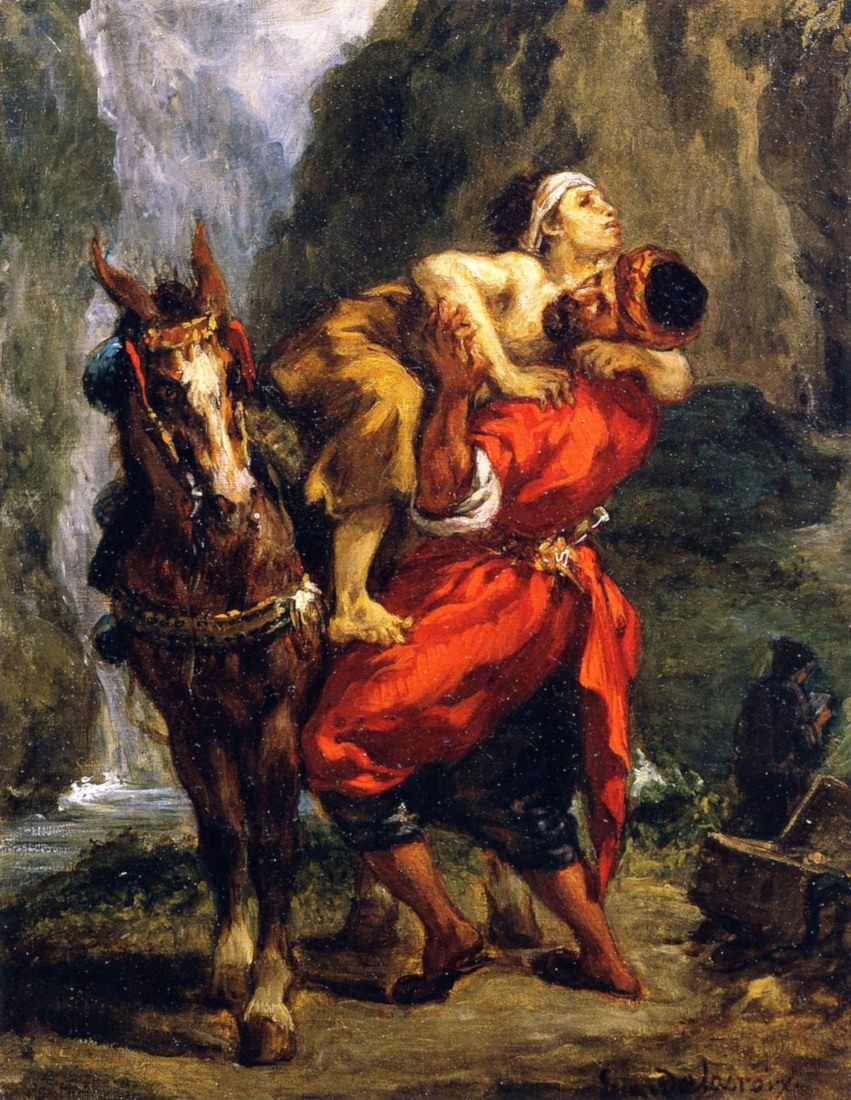
The Parable of the Good Samaritan... wrongly interpreted?

There has been a radical thought percolating and staying relatively lukewarm, like church coffee, in the back of my mind. Here’s my thought: Most Christians have the Parable of the Good Samaritan wrong.

Intro

I realize this is a sticky situation because I’ve heard countless faith-driven orators, those much more skilled than me, speak about this passage. Of course I’m apprehensive about critiquing the interpretation of a passage that is used as a flag-ship model for Mercy Ships, World Vision, and Samaritan’s Purse, the latter’s name being derived directly from this passage. I should mention that my intentions are far from pretentious, but rather my thoughts arise from a great deal of reflection and study. From my fallible mind I grapple with this passage, and I wholeheartedly welcome feedback from my brothers and sisters.

Now for the Meat

Everyone knows the Parable of the Good Samaritan. This passage is frequently used to justify the need to serve the poor and those in need, which is fine. Jesus clearly tells us to follow the example of the Good Samaritan, that there is no debate. “Go and do likewise.” Serve those in need. Piece of cake.

But there is something we’re missing if we stop there. When Jesus says, “Love your neighbor as you love yourself,” notice the initial question from the law expert. “And who is my neighbor?” asks the expert, or alternatively, “So who do I love?” (vs 29)

Jesus responds with the parable of the Good Samaritan, which you know I’m sure, and closes with, “Which of these three do you think was a neighbor to the man who fell into the hands of robbers?” (vs 36) Or, “Which of these three should you love?”

Every Christian I’ve heard, and maybe you at this very moment, thinks that the victim—the one who was robbed—is our neighbor. The one we must love. But Jesus is asking “Which of these three” is the neighbor and we’re called to love? The priest, the Levite, or the Samaritan? The expert responds with “The one who had mercy on him,” (vs 37) or put plainly “The Samaritan.” Jesus makes no mention of the victim, almost as if it’s already a given that we’re supposed to love and help the guy who got beat up and robbed. Before we love the victim we are called to love Someone else first, which then fuels our love to help those in need. The Samaritan. Jesus responds, “Correct. Go and follow his example.”

I do not think it is necessary at this point to indulge in a hidden allegory to find a cryptic message in this parable, though it is fascinating and worthy of study to consider the priest being the Law, the Levite as being the Prophets, and the Samaritan as Christ. (especially considering that the Samaritan saved the victim, paid his debt, and promised that he’d be back. Christ figure anyone?)

But again, the main point—the message Jesus wanted to get across to the law expert—is to love those who respond in grace and to follow their example. It was no mistake Jesus chose a Samaritan as the “Good example to follow” in His story. Loving, and let along following, the example of a Samaritan was the epitome of violating Jewish tradition and customs. And Jesus’ message was all about living by grace and not by a list of rules. Jesus reestablished this notion all the throughout His life, an example being when He ate with tax collectors. “Why are you eating with sinners?” the Pharisees asked and Jesus responded, “Guys. It’s not about a list of rules… it’s about grace.” (Beau’s paraphrase… His exact words were “I desire mercy not sacrifice.”) (Matthew 9:13)

Thus the moral of the Good Samaritan Parable, which differs slightly from traditional misinterpretation: We are to love The Way of the Heart. We are to love this Way as much as “you love yourself.” Furthermore, “go and do likewise.” Act on that love. Let it drive you to help those who have fallen.

So as you can see, the main point really hasn’t changed much; Christians everywhere still understand the moral is following the example of the Good Samaritan. But something important is added when we correctly read Christ’s parable: We are called not only to follow the Good Samaritan’s model, but we are to love that model as we love ourselves. Then that love for Him is what drives our desire to help those in need.

A love for Jesus.

Sunday, July 31, 2011

New video Beau did!

As Vapour
An Everloop Film & Original Poem


Description:
This Creative Brief project was conceived by a collaborative group of creative minds while serving on board the world's largest NGO hospital ship, the Africa Mercy. The ship, run by Mercy Ships, provides health services to underdeveloped African nations and currently is serving Sierra Leone's impoverished people. The project was filmed throughout Freetown, Sierra Leone's capital city.
The creative team consisted of Beau Chevassus (videographer), Claire Ross (writer), and David Peterson (photographer), who combined each of their skills to create the final product.
The technique used in this film is referred to as "Everlooping" by the creative team. For this project the team equipped a Land Rover with a generator strapped to the roof which powered a printer. The printer in turn was connected to a MacBook Pro. Chevassus and Ross would film the subjects, Peterson would take a still screenshot from the footage on the laptop, and the ensuing photo would be printed out for use as the beginning frame in the next clip. Thus the entire film had to be shot chronologically, and the filming was done in but a few hours. The poem itself was compiled by Claire Ross. Ross researched and spoke with dozens of local Sierra Leoneans and orchestrated their quotes and stories into a complete poetic piece. The music is sung by Ross' cousin, Alistair Ross, a world renowned singer. The narration was by a patient on board Africa Mercy. The music was produced by Dove Ross-Williams, Creative Arts Director at Liverpool Hope University.
In addition to the film credits, the Creative Brief team would like to thank Bassey Akpan, Mercy Ship's Marketing Department at the International Operations Center. They would also like to thank the Africa Mercy IS Department, the Transportation Department, their Africa Mercy marketing teammates, and most of all Jesus Christ who is their ultimate source of inspiration and support.

Friday, July 22, 2011

We're Famous!

Welll... maybe we're not entirely "famous" but our local newspaper did feature a story on us. (!!!)
It's brilliantly compiled by Brenda Sexton. This was a total surprise that it got published. My Dad (Mr Jerry) emailed me this story. Woo-hoo!


Wednesday, July 20, 2011

Top 10 List; What You Will Want to Know before Driving in Sierra Leone

Top 10 List
Driving in Sierra Leone
Things You Should Know
Interesting facts and trivia by Beau Chevassus
Photos by Beau Chevassus

1. Virtually every roadside tree, large rock, or building is painted with Sierra Leone's colors of green, white, and blue. Why all this patriotic graffiti? Because during the 50 year celebration the government gave away free paint to everyone.
2. If you are an important figure driving along the roads here, simply put on your emergency flashers and pass traffic at Indie 500 speeds. For some reason, the flashers tell people you're important and people get out of your way.

3. There are barely any sidewalks in Freetown, so watch closely for pedestrians walking on the road. The sidewalks that do exist are simply pieces of cement that are placed over an open sewer gutter. These are treacherous to walk on because there are usually wide gaps between the cement. You do not want to fall into the sewers here.
4. When you are driving along and encounter blackened and charred pieces of land, these are the results of slash and burns. Only until recently are the locals learning that such methods destroy all the nutrients in the soil, thus making it extremely difficult for crops to grow.

5. Pedestrians reply heavily upon car horns. It is not unusually for a man to cross the street without looking. If you hit him, it was your fault for not notifying him of your presence. When in doubt, blow the horn.

6. There are gas stations here, but you may also see road-side stands that hold a row of plastic bottles, which are filled with a mysterious yellow liquid. These are also gas stations. It is typically not wise to purchase petrol from here as the establishments frequently water down their gasoline.

7. It is extremely unlikely that a motorcyclist will ever buckle his helmet. Everything from a baseball helmet to a ski cap is used. Often the helmets are perched on a driver's head backwards.

8. The police in Freetown arrest taxi drivers and impound many vehicles because of expired licenses. Many taxi and poda poda drivers are ex-rebels who have been assigned jobs by the government--with absolutely no training. This is why the cheaper taxis drop you off in Waterloo, the town just 20 minutes from Freetown. The drivers want to stay well clear of the capitol's police.
9. Every once in a while you will see strips of newer asphalt across the road. During the war the rebels dug up chunks of the highway to make it unusable. The people fleeing Freetown had to sneak through the jungles because of the unusable and closely watched roads.

10. When driving through the dusty roads in remote Sierra Leone villages, do not be alarmed if the female population works with very few clothes on. This is culturally acceptable, and you will get use to it. However, be aware that a woman must never show her knees as this is considered scandalous. They must also not wear ankle bracelets, unless of course she is a prostitute.

And a freebie!

11. See these children below? They are chasing a vehicle that just got through their checkpoint. That's right, children often setup 'checkpoints' where they stop passerby and demand money for "fixing the road." Do not be alarmed by their bandito style, "Gimme five thousand!" while the oldest of the children brandishes a cutlass. While yes, you are only losing a mere dollar if you choose to give them money, in the long run you are simply encouraging their behavior. Be cordial and friendly, but these are not neighborhood kids running a lemonade stand. Think twice about reenforcing thievery principles in children, and if need be, drive through their little string that they drape across the road. The last thing Sierria Leone children need is encouragement of corruption and strong-arm principles.

Monday, June 27, 2011

Dunamis - My Short Film!

I have officially finished a project that has been in the works long before Sierra Leone. It is a short film, written and directed by me, but finished only with the support of my family and close friends. This project would not have been completed without their talent. The entire budget for this film was $11, spent on clothes I purchased at Goodwill.

As for the script, I wanted to somehow depict an epic story of how the Bible affects our every day actions, and the future ramifications of these effects. I feel the Bible is often regarded as merely a great book of history, rather than a powerful piece of God that, often unknowingly, transforms lives. This is metaphor from my own mind that follows the life of a simple man and the impact of the Word's power (δύναμις) on the people he meets.

Dunamis
"...because our gospel came to you not simply with words but also with power..."
1 Thessalonian 1:5


- Credits -
Written and Directed by Beau Chevassus
The Missionary - Parker Matthews
The Saved - Devon Merryfield
The Seer - Esther Gere
The Fallen - Fritz Gere
The Shunned - Ben Jenkinson
The Breakers - Sunny Chevassus and Jerry Chevassus
The Conflicts - Zach Mason, Ian Stewart, and Chris Wakefield
Armorer - The Mason family
Gaffer - Liz Chevassus
Music license: Creative Commons 3.0
Thank you to Aaron Brenner's Bakery and Wabash Church.

Thursday, June 23, 2011

Oh hey! I filmed this!

Did you know that all the footage I film we physically fly to Texas for Mercy Ships to edit?(it's way too much to transfer via the internet!)  As you know, I do love editing.  In my spare time I've just finished a [quite serious] Christian short film, which has been completed last night.  What only-filming does is it allows me to fully focus on coordinating and executing film shoots instead of being distracted with sitting in front of a computer, editing, rendering, and broadcasting.  That would take at minimum 85% of my work week--time that otherwise could be used for planning and shooting.
Here is an example of what the talented editor at the Mercy Ships International Operations Center (IOC) has done with the footage I took here in Sierra Leone:

Extra points if you find Liz! 

Saturday, June 4, 2011

A fun picture of Liz.

A picture I took of Liz, her friends on the ward, and also...
wait a sec! Who is that!

(click for bigger picture)

Friday, June 3, 2011

What is Adventure Videography/Photography?


Fun post time!


Here's a quick list of things I've had the pleasure of experiencing. Certainly none of them are necessary 'qualifications' to be an A.V/P. Every person's experience is different, but I'm sure you may still relate in some way...

You know You're an Adventure Videographer/Photographer When...

■You've had to make the decision between, "Should I help rescue him or film?"
■There is duct tape on your camera.
■You've used your t-shirt to clean your lens.
■You've seriously considered whether or not your camera floats.
■You get excited over equipment that is "ruggedized" or is "military certified."
■You've taken footage/pictures of anything bloody.
■You've filmed/snapped with one hand while the other hand is pushing branches or people away.
■You've modified your attire to "blend in" before you went on a shoot.
■You've slept with your batteries so the extreme cold wouldn't drain them.
■You've sealed your camera in a plastic bag before you took it outside so it would acclimate to the extreme humidity while protecting the innards from condensation.
■You've wrapped your camera up to keep it warm. (Liz made me a little wool jacket that fits my camera snuggly... this is why I love her)
■You've been denied footage or a photo because the subject thinks cameras steal souls. (not kidding)
■You've mailed footage/photos to someone for the pics to be published online.
■You've had the police called on you while on a shoot.
■And they've said, "You're lucky we didn't bring the K-9 Unit."
■You've had a valid fear of being shot [by a gun] while shooting [with your camera].
■You've been handcuffed by police officers while on a shoot.
■You've huddled over your camera like a crestfallen turtle while changing lenses to protect the sensor from the elements.
■You've moved locations because there are "too many security cameras."


Friday, May 27, 2011

Fun Photo Albums & Videos!

We have a fantastic collection of photos and a few videos for all our friends and family to view. The albums have been uploaded periodically throughout the past week or two, so I thought I'd collect them all nicely into a neat package.

Note: The photos are hosted on Facebook, however you do not need a Facebook account to view them. Everything posted here is public. Enjoy!

YouTube - Sierra Leone Montage - This is Africa
http://www.youtube.com/watch?v=fwSGQyTaSM4

A Tour of our Home, The Africa Mercy
http://www.facebook.com/media/set/?set=a.556789617575.2054785.59401686&l=fad685b671

Tuesday, May 17, 2011

Bunce Island - The African Auschwitz

Mercy Ship log. Date 05-17-11.

Bunce Island, West Africa's Largest Slave Castle

Such a tiny little island. Such tippy little canoes that brought us there. Such tiny episodes of barfing fits our crew had after the trip. (though by the grace of God and Bee's hand-sanitizer, Liz and I narrowly escaped the onslaught of sickness). Yes, such was our incredible trip to Bunce Island!
Upon waking up extra early to a pre-made breakfast that Liz and I had stored, we smushed the entire group into three Landrovers. These magnificent vehicles--called by Top Gear, "The worst car... in the world"--took us over a mountain road that should not even been walkable. Ryan, The Crazy Man, handled the sputtering hulk of oil and gears like a true South Africa matador. I had no doubt in my right mind we would stay on all four wheels, however the left half of my mind was screaming, "IF THAT TAXI DOESN'T KILL YOU, YOUR HEAD HITTING THE ROOF WILL!" This little voice was quickly silenced as we relaxed onto smooth, bright red dirt roads. We buzzed down these tangled roads, traveling deeper and deeper into Sierra Leone's jungles. I never thought I'd see the stereotypical African woman standing in the middle of a blackened, slash-and-burned field, raising her smiling face in time to see our entourage being chased by the village children all smiling and screaming one word. That word either meant, "White people! White people!" or "Your vehicle is falling apart! Your vehicle is falling apart!" Every image was worthy of National Geographic.
We pulled into a tiny fishing village with brightly colored canoes pulled up onto the beach. Eventually we were loaded into these boats. Because we had to quickly counter-lean in the opposite direction that the tippy canoes would tilt, our abs by the end of the boat ride were nice and tight. The fellows who paddled looked like they had worked out since they were 1.
We skipped across the blue waters and landed on a squat island, barely big enough for a castle, which evidently there once was one. This was Bunce Island.
Bunce Island was known as the largest slaving fortress in West Africa. A staggering number of Africans were captured and herded like cattle (and treated far worse) by their own countrymen, ultimately to be sold as slaves to plantations in the Carolinas. Now what remained of this gloomy place were leaning stone walls now having the tables turned and relying on the vines to be held up. Liz and I wasted no time walking hiking and exploring the vicinity. We found a long row of canons--still in position, pointed out toward the open waters. We found doorways and windows that had once held either beautiful stained glass for the visiting ship captains or iron bars that kept freedom out. It was hard to tell exactly what the purpose of each building was.
The expanse of the facility was quite impressive, and what was more odd was we had free reign over the entire place. If back in the states we visited ruins that were 290 years old, I strongly doubt they would let us freely walk around it. I felt prepared to somberly and reverently walk through these ruins, mentally comparing what we were about to see to Auschwitz. The ruins were just that though... ruins. Ruins that were slowly being swallowed up by a powerful jungle. Though to be fair, the emotional disconnect I felt probably would not be shared with an African American. They really could do so much with this place.
Nonetheless, the vacant wells (VERY DEEP), the crumbling graveyard, and the dungeons filled with hundreds of screeching bats made the trip very worthwhile. I stooped down and stood in the bat infested dungeon long enough for one to swoop by my ear, another crawl over my sandal, and still another politely introduce himself as Clive. Then I was out of there. It was perhaps the spookiest place I've gone, and definitely one of the most unsanitary. However I can guarantee you that you would never get malaria in that dungeon. Ever.
We ate our lunches on the beach with about 10 local boatmen staring at us. Privacy is just something you don't get in third world countries. I drank my Iron Brew ("South Africa's favorite soda") and Liz, after finishing her Diet Pepsi, finally conceded to giving the obviously empty can to a kid who was pestering her for it. She even shook it upside down to show him that there was nothing left. He took it, smiled thankfully, observed for himself that there was nothing in the can, and nonchalantly threw it in the brush. Liz gave him the wrinkled neck look, picked it up, and put it in her pack.
On the way back the heat was very intense and I was quite thirsty. So being the wise white man that I was, I politely asked the boatman behind me if he needed a hand paddling as I had astutely observed there was an extra paddle under my seat. I think he thought I was telling him a joke because both he and the canoe owner ("Mustafa") (not kidding) laughed so hard the boat nearly tipped. I think my paddling lasted about as long as one of the fishing village's 2 year old girls. My shoulders burned so bad, but I was digging a lot of water... I refused to Phantom Paddle! I was also quite determined to get heat stroke. I kept at it for a half hour, pausing to catch my breath every 5 minutes, to which each time this occurred the man behind me slapped me on the back and yelled, "ALMO THERE!"
When we stumbled into the beach where our SUVs were parked we took lots of pictures and paid for our trip (35,000 leone per person). My exhaustion improved when we started driving again and the cool, dusty wind swept through the vehicle. Then it rained. A lot. FYI for the Land Rovers manufacturer (if you are still in business), your vehicles are not watertight.
Then the road magically switched from a running creek back to a dry dusty road again and back we traveled through Grafton to Freetown to our floating homestead. Evidently a few of the crew members got pretty sick the day after. Poor Joe barfed 20 times, but he was talking normally the next day. I'm sure at some point I will stumble into a bug that will wreak havoc on my tummy, but for now thank God everyone's feeling better.
As for work, I've been putting in 8-10 hour days in attempt to get on track with my responsibilities. Things are making a lot more sense compared to a week ago. I'm still in the dark regarding a few aspects, mostly administrative tasks... how things are organized, labeled, and stored. You know when you're having trouble with a math problem, and you tell your teacher you don't understand? That teacher's response is almost always, "Well what part do you not understand?" When it's the whole administrative process from beginning to end, what do you say? You identify the chain of command, humbly ask as many questions as possible, and proactively hit the ground running. I guess it's just that I come from an atypical background. I know my stuff very well, I get things done fast and with good--often different-looking--results, but I do it slightly differently and using different terminology. It must be very difficult to run an organization run by volunteers because they all do things according to their own personal little agendas and experience (e.g. "I can't work like that. I've always done it this way."). You can't necessarily fire anyone... not because they're volunteers but because they're in the middle of Africa. ("Okay clean out your desk. Here's your water jug.") (!) But no seriously, one thing I've observed with Mercy Ships and their volunteers is everyone is extremely skilled at what they do, even if they do come from different backgrounds. It definitely is an elite program and crew, all doing it for Jesus, and because of that there's a huge impact. Simply walking through the streets, people will shout and pester you until one of them whispers "Marcy Sheeps." They all get a lot more respectful.

P.s. I know Auschwitz was meant for different purposes, but I can't get over how good "The African Auschwitz" sounds. Just creepy! And yes! I coined it!

Thursday, May 12, 2011

Walking Freetown.

Mercy Ship log. Date 05-11-11.

Walking Freetown.

Today! Dane’s 18th B-day! Liz is feeling better! Rain! Rain! And more rain! Hot office! Fun video footage of Alie and Abdul! Too much let’s slow it down some…

I’ve been slowly acclimating to my job duties, orientating on the ship as a crewmember, and settling down in our new home. These may seem like relatively simple tasks, but typically (in a more normal situation) each takes at minimum two weeks. It’s been pretty overwhelming, but Jesus has been making it work. I would like to get to the point of really focusing on the patients rather than just taking care of myself and Liz. So far I’ve just scratched the surface on how impactful Mercy Ship’s services are to a country… I’ve been too busy trying to find laundry soap, get my body clock in sync, and go on a orientation scavenger hunt and have 200 things signed-off (wrinkled neck look). As for seeing the country, you hear a lot of crew talk about how hard it is to “get off the ship.” It is quite difficult because 1) everything of comfort someone may find on the ship and 2) everything outside the gates is extremely uncomfortable. While this may seem like a given (of course one of Africa’s poorest countries would be “uncomfortable”) but even for the most basic outing—a simple 5 minute walk through the neighborhoods—one must be “on” and alert the entire time. Here is a starter list of what to be aware of for your nice, peaceful 5 minute Freetown stroll:

Watch for that group of children kicking their soccer ball at you (they like to do that and/or show off a little), watch for the other one trying to take your water bottle, give that one a high five and say hello, jump out of the way from that speeding taxi (distance between honk and impact: 2 seconds), don’t fall into the gray water open sewers/deep ditches (this is harder than it seems), don’t step in that horse poop (wait, I haven’t seen any animals on the streets!)(seriously), don’t get lost and keep your bearings, don’t step in that vendor’s peanut basket (suspiciously set on the ground directly in front of where you’re walking)(“You break it you buy it”), watch out for the rest of your party, don’t be rude (you are Christ’s representative), and lastly relax and enjoy your walk!

To be fair, it’s not quite fair to put any lofty expectations on the degree of peace I receive from an afternoon walk. I almost sound like the photographer who has the subject tilt his face toward the light, position his hand into an awkwardly balled-up fist under the chin, and twist his body so it faces the camera, and then only to say, “Great. Now relax.”

On the plus side, it’s quite an adventure (pinball is fun after all) and it really makes one appreciate the ship. Thus I can see why people say it’s hard to “get off the ship.”

I have an adventure planned for this upcoming weekend; perhaps we’ll be able to see Bunce Island, the biggest slave fort on the West African coast. Even Black Barth, some famous pirate fellow, attacked the fort in 1820. There are so many historical landmarks around here that are steeped in history you have to consciously look beyond (without trying to disregard) the poverty and filth to see and appreciate them. But that’s what these people want visitors to do. They’re quite proud of their country, as one should be for any country he lives in (regardless of problems)(I’m talking to you America!), and I have not once ever asked a local about “the war.” They want to be known for something else, and they will come down to your level to help you appreciate Sierra Leone. If you joke with a passerby on the street about the reckless taxis speeding by with high-treble disco music thumping, they will wholeheartedly laugh and joke right along with you.

Now, off to work (I have to log some footage, “The Witch of Freetown) and then maybe by then Liz will be awake!

Saturday, May 7, 2011

Beau’s Africa Journal / 1

Mercy Ship log. Ship date 05-06-11.
(yes, I'm formatting the date of my journal entries like Captain Picard does)


Things that surprised me on my first day of Mercy Africa:

- How humid it in Freetown.

- How cool it is in our, surprisingly big, cabin. Fridge, bathroom, curtain separating our bed from the main part, window overlooking the gangway.

- How cheap everything is here. Chocolate-covered Waffles with whipped cream: $0.75. Jay Swanson bought Liz and me waffles. He is a wonderful guy who is writing a cool sounding sci-fi book. He also plays the guitar and loves restaurant style salsa.

- Gurkha warriors guard the gangway.

- There’s a lot of sick people Mercy Ships heals. The Hope center was teaming with adults and kids, one child of which stood as tall as my hip and pluckily asked me, “Hey white man!”

- Krio is awesome. “Kuche” means hello, as told to me by Alie at lunch.

- There’s a lot of unused, expensive equipment on board, at least equipment related to videography. TWO Manfrotto tripods? A Mac tower that runs Final Studio just sitting under a mound of boxes in an unused office? Really? (Though it makes me feel wanted. “Yeah! We have a videographer!”)

- Mercy Ships crew, especially long-termers, are extremely reluctant to throw anything away. While this is a good habit all around (we should be frugal, especially with resources that are donated), the amount of unused batteries (dead), boxes (empty and breaking), and office equipment (outdated, long-replaced) is astonishing. While cleaning my office, I gave serious thought to how much fuel Africa Mercy wastes toting around garbage.

- Volunteer organizations are tough. Several meetings and orientations today were ‘missed’ by the very ones who called them (and these aren’t locals who are used to third-world-country-time, which is understandable. These are industry specialists!). I waited 45 minutes in the café for IT to wander down so they could register my MAC address for Wifi here. Can one fire volunteers? Yes. But not when that volunteer is living next to you, she’s paying to be here, and she’s stuck in the middle of Africa.

- Mercy Ships is extremely Christian. There was a Eye Celebration gathering outside on the dock. The people whose cataracts were removed had to be shushed because they all wanted to stand up and sing Jesus’ praise and thank Mercy Ships.

- Cell phones are nice to have. I need a SIM card desperately, just to get a hold of Liz. Yes it may seem like an unneeded luxury, but if they’re cheap and available then heck yeah I’m gunna get one!

- How comfy these mattresses are.